
From the skin, For the skin
God’s gift to mankind…
What is Lanolin
Lanolin is a highly refined and purified natural grease that is extracted from Sheep’s Wool. The crude (or raw) grease is secreted from the sheep’s sebaceous glands, forming a protective coating on wool fibres. Despite its greasy consistency, it is chemically classified as a wax; and is known by various names such as Adeps Lanae, Lanolin Anhydrous, Wool Fat, Wool Wax, Wool Yolk, and Lanolinum Anhydricum. It is entirely different from an animal body fat.
Origin & Nature
Lanolin originates from a unique unctuous substance secreted from the sheep’s sebaceous glands in their skin, forming a natural protective coating on the wool fibers.
Unique Chemistry & Properties
The crude grease is extracted from the natural greasy wool. The final Lanolin is obtained after thorough refining and several other processes. It is a complex mixture of Esters, Di-Esters, and Hydroxy Esters of high molecular weight Lanolin Alcohols and Lanolin Acids.
Lanolin has a difficult to duplicate soft desirable texture and composition.
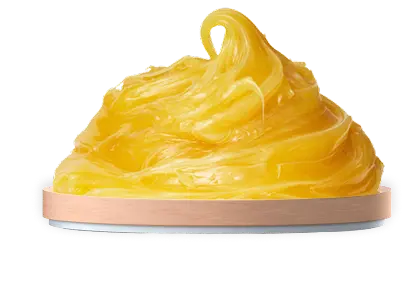
Versatility & Legacy
Lanolin’s soft texture and multifunctional groups have made it a favourite among product formulators. It’s widely used as a vehicular ingredient in skincare and pharmaceutical products.
It is a naturally derived wax that mimics the lipid structure of human skin, making it an ideal ingredient in a wide range of cosmetic and personal care formulations.
Lanolin is known for its excellent emollient, conditioning, retention and protective properties, making it a multipurpose ingredient for products across many industries and applications. In Skin Care applications, Lanolin plays a vital role in not only enhancing both product performance but also skin compatibility.
Lanolin is also widely used in various industrial and household applications.
Let's Discuss Your Lanolin Requirements
A complex creation of nature with fascinating chemistry
Broadly, lanolin and its derivatives are used as key ingredients in some of the world’s most popular brands of pharmaceuticals (topical applications), personal care/cosmetics, toiletries, paints and coatings and various industrial and household products.
It is also compatible with numerous additives that modify the consistency and characteristics of the resulting products.
Lanolin is an emollient, an excipient, a plasticizer, an emulsifier, a super-fatting agent, a dispersing agent, a protector and a preserver; all rolled into one.
Without lanolin, these products are not likely to have the required qualities that make them so unique.
Use of Lanolin
Lanolin in Personal Care / Cosmetics
- skin care ointments, moisturizers, serums and creams (face creams, hand creams, body creams, foot creams, sun-screen creams, etc.)
- cleansing balms / butters
- oil-based skin lotions and cleansing oils
- shaving creams, aftershaves
- face wash, facial cleansers, face masks
- hair care products – shampoos, conditioners, hair wax/pomades, hair sprays, beard oils, etc.
- make-up & color cosmetics (blushes, foundations, concealers, eye liners, mascara, etc.)
- lipsticks, lip balms, lip gloss, etc.
- baby care products – lotions, diaper creams, shampoos, baby wipes, breastfeeding care – nipple balms and creams, etc.
- soaps, hand-soaps and cleaners, facial wipes
- nail care – nail polish removers, cuticle repair creams
- massage oils
- intimate care products
Lanolin in Topical Pharmaceuticals / Health Care
- ointment bases / topical carriers
- topical products for cutaneous infections (e.g. acne)
- protective and healing creams, balms, ointments
- burns dressings and wound sprays
- medical tapes and plasters, surgical adhesive tapes
- barrier dressings and medical liners
- antiseptic creams, antiseptic wipes, antifungal creams, antioxidant creams
- pigmented medications (e.g. with zinc oxide)
- deodorizing toiletries, disinfectants, etc.
- ophthalmic ointments
- post operative / procedure emollients
- radiotherapy skin care lotions
- other pharmaceutical / healthcare / dermatology creams, ointments, salves, balms etc.
Lanolin in Industrial Application
Anti-corrosive applications and functions:
- rust preventives
- dewatering rust preventives (for saltwater-resistant protection of ships and seawater tanks)
- corrosion inhibitors (for protection and conservation of ferrous vehicle and vintage car parts)
- automotive undercoatings
- conserving items such as hardware, conduits, pipelines, machinery, roofing tiles, sheets, plates, tools, steel wire ropes, surfaces of wood and fabric, etc.
Combined with its anti-corrosive potential, Lanolin is also a valuable lubricating and conserving material in various industries. Other special applications are:
- lubrication grease for engines, engineering parts
- automotive lubricants
- metal cutting oils
- lubricant for metal processing, e.g. rolling, grinding, pressing, etc.
- marine and off-shore lubricants
Other industrial applications:
- metal polishing bars & compounds
- specialty cutting oils
- detergents, soaps & cleaners
- special greases, jointing pastes, vulcanizing pastes, putties,
- polishing waxes and abrasives
- metal and chrome pastes
Leather and textiles auxiliaries:
To protect leather from natural degradation processes, it must be treated by chemical tanning agents to create a durable product from an organic source. Lanolin is a widely used ingredient for fat liquors that are applied after tanning to soften leathers.
Lanolin is used in products for:
- tanning Chemicals and fat liquors,
- leather softening and protecting creams
- kicking greases (for Fur and other Skins)
- leather & fur dyeing chemicals
- shoe polishes, shines, creams & protective sprays
- marking fluids, textile safe markers,
- water-resistant coatings (for textiles, leather)
- leather and suede dressings
- home care products (disinfectants, detergents, soaps, sanitizers, wet wipes)
- printing inks, packaging inks, newspaper inks
- marker, drawing & correction inks
- decorative paints & coatings, primers, roof paints
- protective paints and coatings
- can coatings
- specialty paints, sprays, varnishes, lacquers
- paper conditioner
- concrete waterproofing products
- furniture & wood polishes
- chewing gum bases
- adhesives, plasters & tapes (industrial, electrical, etc.)
- agrochemicals (seed coatings & dressings, concentrates, spray enhancers, plant growth & protective pastes, etc.)
- maintenance waxes (conveyor belt wax, ski wax, car wax, preservation waxes)
- natural wax additives for rubber applications
- pet care products (shampoos, grooming bars, etc.)
- veterinary care products (wound care creams, hoof creams, livestock care creams)
Wool You Like To Know
We pledge to our valued customers all around the world that we shall strive to offer our most dependable products and will endeavor to constantly improve quality and services. We aim at becoming one of the worlds leading manufacturer-exporter of Lanolin and allied products in the foreseeable future.
- Lanolin is a non-toxic, biodegradable, anti-carcinogenic and biocompatible product.
- Lanolin is a natural product and does not contain any petroleum based compounds.
- Lanolin is non-evaporative.
- Lanolin is non-conductive in electrical applications.
- Lanolin is a self-renewing and self-sustaining input that causes no harm to the environment.
We strictly stand by our policy and commitment to the ethical sourcing of our inputs. The shearing of natural wool from sheep is necessary; failure to do so burdens sheep to carrying the heavy wool and also attracts bugs and insects from the surrounding environment.
This process CAUSES NO HARM TO ANIMALS.